
 EN
EN
Quick Links
A groundbreaking artistic event is captivating visitors at the China National Museum. The inlaid version of "A Thousand Miles of Rivers and Mountains," a seminal work of Chinese art, was officially unveiled to the public on May 13, 2025. This exhibition initiates a profound cultural dialogue, spanning a millennium, by reinterpreting a Northern Song Dynasty treasure through the innovative use of natural marble and precious gemstones. This is not a simple reproduction; it is a transformative act of creation that converts the legendary, two-dimensional silk ink scroll into a tangible, three-dimensional art form. This monumental piece offers a completely new and immersive traditional aesthetic experience, allowing the ancient masterpiece to communicate with a modern audience in a novel, visceral language. The iconic greens and blues that define the original painting now adorn the museum in a spectacular new form, achieved through the meticulous inlaying of lustrous gemstones onto vast, carefully selected slabs of marble.
The original "A Thousand Miles of Rivers and Mountains," painted by the prodigious artist Wang Ximeng during the Northern Song Dynasty, holds an unassailable position as one of China's ten most famous paintings. Its enduring fame rests on its magnificent depiction of endless landscapes, rendered with mineral pigments such as azurite and malachite. The painting is far more than a scenic representation; it is a profound embodiment of the ancient Chinese romantic imagination of nature and the deep, spiritual connection to homeland. The inlaid version of this masterpiece, now proudly on display, approaches this legacy with immense reverence while simultaneously breaking conventional artistic boundaries. The creative philosophy was clear: to honor the spirit of the original through a radical new medium. The foundation of this ambitious project is natural marble. The creative team embarked on a rigorous, multi-stage selection process to source marble slabs whose innate, organic textures intrinsically resembled the mountain ranges and water veins of the painting. The smooth, polished texture of the marble naturally aligns with the texturing techniques—the "cun fa"—used to define the mountains in the original scroll, while its flowing patterns perfectly capture the ethereal fluidity of clouds and water.
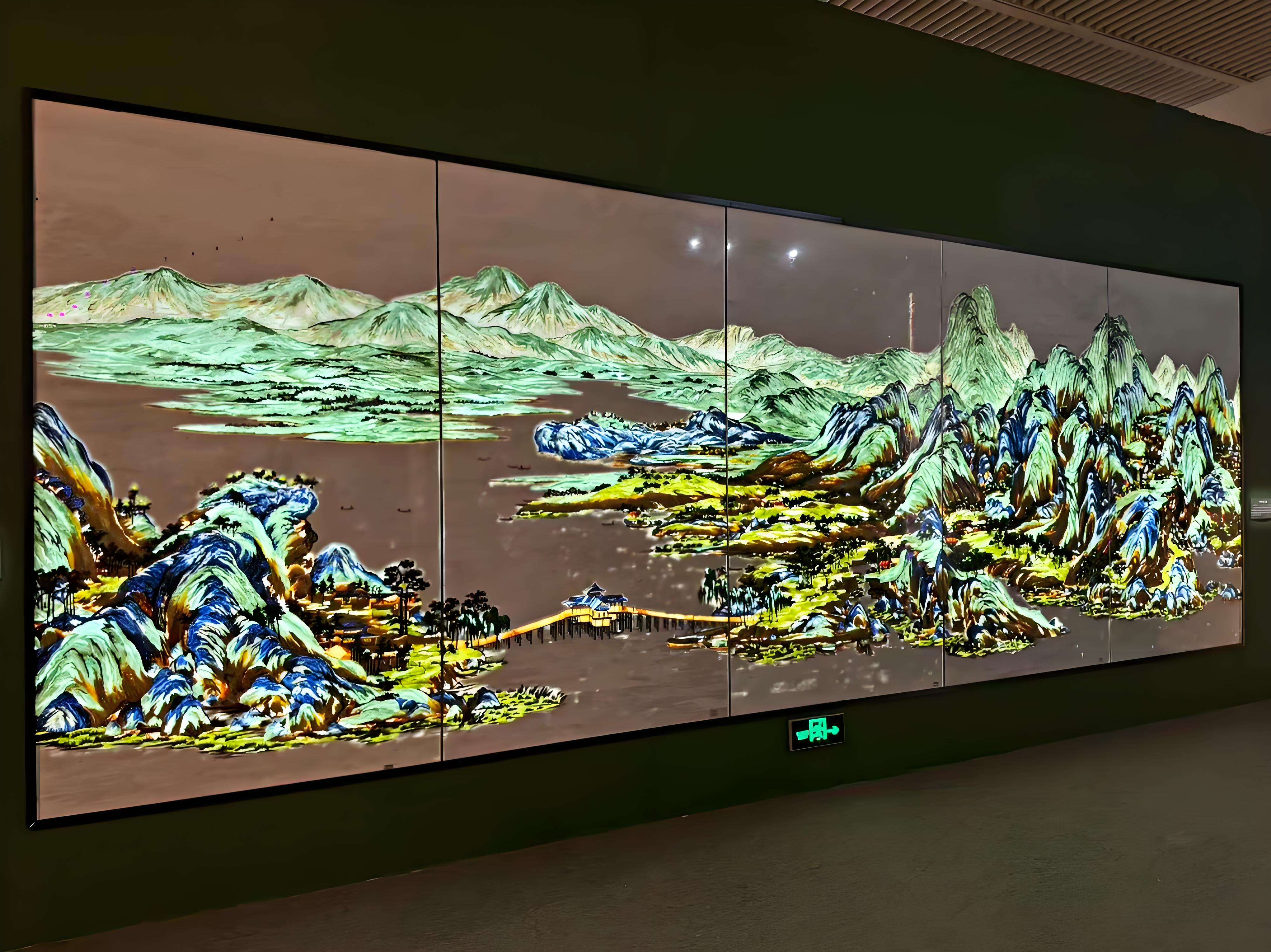
The color and soul of the original painting are reborn through the precise and masterful inlaying of brilliant gemstones. This is where the ancient mineral pigments find their contemporary, luminous equivalent. To recreate the iconic color palette of "A Thousand Miles of Rivers and Mountains," gemstones were meticulously categorized by their color intensity and saturation. The artistic challenge was to replicate the layered depth of the landscape, which transitions from the lush, dark greenery of the foreground peaks to the soft, azure depths of the distant background. Achieving these seamless, atmospheric color transitions required the sophisticated layering of dozens of different gemstone combinations. Light blue gemstones, such as aquamarine and blue topaz, are strategically inlaid to capture the serene clarity of the painting's vast rivers and expansive skies. Conversely, dark green gemstones, including varieties of jade and emerald, are used to restore the dense, layered foliage and the majestic, rolling greenery of the mountain peaks.
The artistry of the inlaid version of "A Thousand Miles of Rivers and Mountains" extends far beyond simple color matching. Every single cut of the gemstones and their deliberate arrangement on the marble canvas is a conscious decision that corresponds to the direction, pressure, and flow of the original artist's brushwork. This meticulous attention to detail ensures that the dynamic energy and rhythmic movement central to classical Chinese landscape painting are not just preserved, but are physically manifested. When light falls upon this spectacular artwork, a magical visual symphony occurs. The delicate, subtle texture of the marble intertwines with the dazzling, reflective brilliance of the gemstones. This interplay of matte and gloss, of earthly foundation and celestial sparkle, actively brings to life the original painting's poetic imagery of "stacked peaks and boundless rivers." This three-dimensional texture allows viewers to visually and imaginatively "touch" the landscape, experiencing the millennium-old masterpiece with an unprecedented sense of physical presence and depth.
|
The entire creative process was an epic endeavor of meticulous precision, driven by the goal of faithfully recreating the original masterpiece's sense of "a thousand miles in a palm." The selection of marble was a critical and demanding phase, ensuring a perfect, harmonious alignment between the stone's natural, God-given patterns and the painted landscape's mountain-river contours. Similarly, the gemstone inlay process required an artisan's patience and a jeweler's exacting standards. Dozens of gemstone types were combined like a painter's palette to create smooth gradients and tonal variations, capturing the vast spatial depth that makes the original painting so captivating. The exhibition of the inlaid version of "A Thousand Miles of Rivers and Mountains" at the China National Museum represents a significant moment in contemporary cultural heritage. It is far more than the appearance of a new art object; it is a vivid and powerful practice of the "living inheritance" of China's excellent traditional culture. |
This project successfully brings the classic masterpiece out from the confines of its museum display case and the pages of art history, building a robust and beautiful bridge for communication between ancient and modern artistic sensibilities. This bridge is constructed through the innovative use of new materials and new techniques, which serve to amplify, rather than obscure, the timeless beauty of the original. The inlaid version of "A Thousand Miles of Rivers and Mountains" does not seek to replace the original, but to engage with it in a dialogue that spans centuries. It allows a contemporary audience to relive the timeless beauty of Wang Ximeng's vision while simultaneously enabling the deep cultural gene of "thousand-year green and blue" to blossom with eternal charm. Within the exhibition space of the China National Museum, this innovative artwork allows this enduring cultural symbol to transcend time and space, resonating with new generations and ensuring its legacy continues to evolve and inspire.
 ONLINE