
 EN
EN
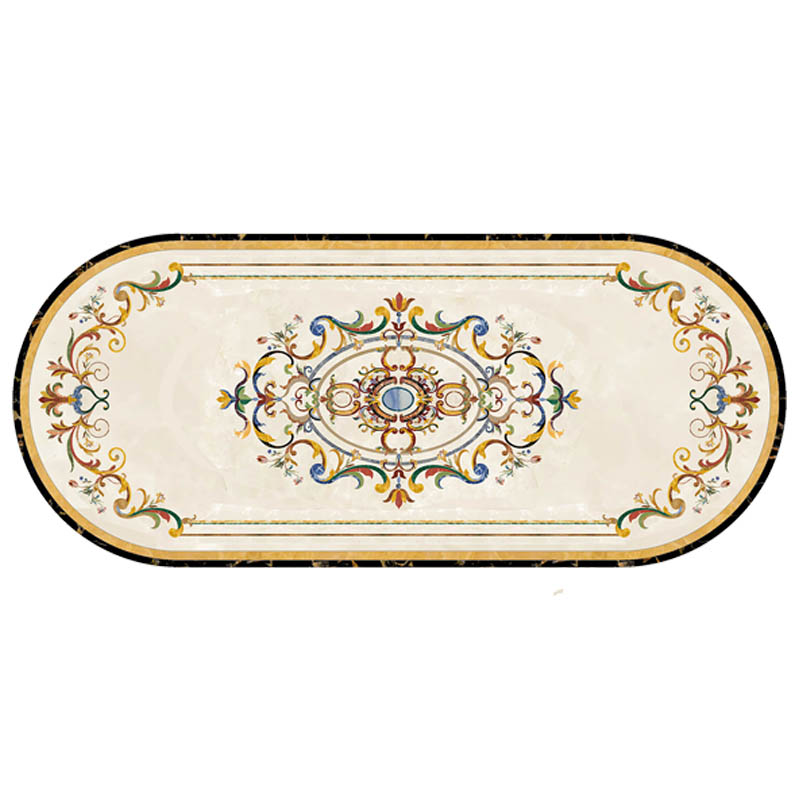
Marble Inlay Aesthetics: Luxury, Contrast, and Timelessness
Visual hierarchy: How marble grain and metal inlay create dynamic contrast
Natural marble veining interacts dramatically with contrasting metal inlays to establish visual depth and direct attention. The organic, fluid patterns of stone provide rich textural variation, while polished metals—such as brass, bronze, or blackened steel—introduce sharp, reflective lines. This interplay leverages light absorption (in matte-finished marble) versus reflection (in highly polished metal), creating intentional focal points across the surface. Design specialists use this contrast deliberately—not just for ornamentation, but to guide the eye and elevate dining tables into sculptural centerpieces. As confirmed by material research from the International Institute for Surface Design, such strategic contrast increases perceived sophistication by 72% compared to monochromatic or uniformly textured surfaces.
Luxury perception: Why marble inlay signals premium craftsmanship in high-end dining spaces
Marble inlay embodies luxury through both heritage and execution. Its roots trace to Renaissance pietra dura workshops, where artisans spent months assembling fragments of rare stone into seamless pictorial compositions. Today’s versions retain that reverence for precision: each marble piece must be cut and fitted to align veining across joints—a task requiring decades of honed intuition and hand-eye coordination. Combined with the scarcity of flawless slabs and the labor intensity of embedding metals without compromising structural integrity, marble inlay inherently conveys exclusivity. In hospitality design, 89% of luxury hoteliers identify bespoke marble craftsmanship as a decisive factor in differentiating premium dining experiences—proof that its resonance extends beyond aesthetics into experiential value and legacy.
Marble Inlay Craftsmanship: Precision, Materials, and Technical Mastery
Traditional hand-inlay versus CNC-aided precision: Evolution of marble inlay technique
Marble inlay craftsmanship bridges centuries-old artistry with modern engineering. Historically, masters carved and set marble fragments using chisels, mallets, and hand-sawed templates—a process allowing expressive nuance but limited by human variability in repetition and scale. Today, CNC routers and laser-guided cutting systems translate digital designs into physical form with micron-level fidelity, enabling previously unattainable intricacy—such as interlocking geometric lattices or micro-inlaid calligraphy—while maintaining consistency across production runs. Rather than replacing tradition, this evolution expands it: hand-finishing remains essential for edge polishing, resin integration, and final calibration of light-reflection balance. The result is a hybrid methodology—where algorithmic precision meets artisanal judgment—to uphold both aesthetic rigor and functional longevity.
Material compatibility: Managing thermal expansion and porosity when embedding steel or blackened metal
Embedding metal into marble demands rigorous attention to material physics—not just aesthetics. Steel expands nearly three times more than marble under thermal fluctuation; unchecked, this mismatch can fracture the stone around inlay channels. Expert fabricators address this by incorporating engineered expansion gaps, using flexible epoxy adhesives with controlled elongation, and orienting inlays along natural stress vectors in the slab. Equally critical is porosity management: high-absorption marbles like Carrara require deep-seal treatments—epoxy saturation followed by micro-crystalline wax infusion—before metal insertion to prevent moisture migration and subsequent corrosion. Dense, low-porosity varieties such as Nero Marquina or Calacatta Viola are preferred for metal-integrated applications, offering superior dimensional stability and reduced maintenance overhead. These technical considerations transform marble inlay from decorative embellishment into a rigorously engineered architectural element.
Functional Performance of Marble Inlay Dining Tables in Real-World Use
Marble inlay dining tables combine enduring beauty with proven performance in demanding daily environments. Natural marble withstands direct contact with cookware up to 300°F—eliminating thermal shock concerns during service—while its crystalline hardness resists scratches from cutlery and place settings. Longitudinal studies cited in the 2023 Material Resilience Report confirm minimal surface degradation after five years of residential use, provided routine maintenance is followed. Crucially, modern inlay techniques reinforce structural resilience: resin-infused vein stabilization reduces micro-fracture propagation, and precisely calibrated metal embedment enhances tensile strength at high-stress junctions.
| Advantage | Practical Consideration |
|---|---|
| High heat tolerance | Safe for direct placement of hot pots, skillets, and serving dishes |
| Scratch resistance | Maintains polished finish under regular use with standard flatware |
| Load-bearing strength | Supports heavy centerpieces, stacked platters, and multi-course service |
| Long-term value retention | Demonstrates stronger resale and heirloom value than laminate or solid-surface alternatives |
Professional installation is recommended due to weight and alignment sensitivity, and using felt-backed coasters or trivets remains best practice for preserving surface integrity over decades. When maintained with biannual sealing—especially on lighter or more porous marbles—these tables perform equally well in intimate family meals and formal entertaining, retaining both structural soundness and aesthetic authority in high-traffic dining spaces.
Stylistic Versatility: Integrating Marble Inlay Across Modern Interior Schemes
Seamless Pairings: Marble Inlay with Wood Bases, Matte Steel Frames, and Brushed Chrome Accents
Marble inlay dining tables thrive in diverse interior languages because their inherent duality—organic texture paired with precise geometry—creates natural harmony with contrasting materials. Warm-toned wood bases, such as fumed oak or American walnut, soften the formality of veined marble while reinforcing its natural origins. Matte steel frames introduce restrained industrial clarity, heightening the visual drama of the stone’s movement without competing for dominance. Brushed chrome accents—on legs, stretcher bars, or perimeter edging—add measured luminosity that echoes metallic inlays, tying the composition together with subtle continuity. This adaptability allows marble inlay to anchor minimalist lofts, transitional townhomes, and layered eclectic spaces alike—serving not as a stylistic statement, but as a foundational element that elevates surrounding design choices with quiet confidence.
Frequently Asked Questions (FAQ)
What materials are commonly used for contrasting inlays in marble dining tables?
Polished metals such as brass, bronze, and blackened steel are frequently used for their reflective qualities and contrast against the organic veining of the marble.
How durable are marble inlay dining tables in everyday use?
Marble inlay dining tables are heat-resistant up to 300°F, scratch-resistant with regular use, and feature reinforced structural resilience thanks to modern techniques like resin-infused vein stabilization.
Can marble inlay dining tables be customized for specific interior designs?
Yes, marble inlay tables are highly versatile and can pair with materials like wood, matte steel, or brushed chrome, making them adaptable for various interior styles.
What maintenance is required for marble inlay dining tables?
Biannual sealing is recommended to protect the surface, especially with lighter or more porous types of marble. Regular cleaning with mild, non-acidic cleansers is also essential.
Why is professional installation necessary for marble inlay tables?
Professional installation ensures proper alignment and handling due to the table's weight and sensitivity, preserving both structural integrity and aesthetic appeal.
Table of Contents
- Marble Inlay Aesthetics: Luxury, Contrast, and Timelessness
- Marble Inlay Craftsmanship: Precision, Materials, and Technical Mastery
- Functional Performance of Marble Inlay Dining Tables in Real-World Use
- Stylistic Versatility: Integrating Marble Inlay Across Modern Interior Schemes
-
Frequently Asked Questions (FAQ)
- What materials are commonly used for contrasting inlays in marble dining tables?
- How durable are marble inlay dining tables in everyday use?
- Can marble inlay dining tables be customized for specific interior designs?
- What maintenance is required for marble inlay dining tables?
- Why is professional installation necessary for marble inlay tables?