
 EN
EN
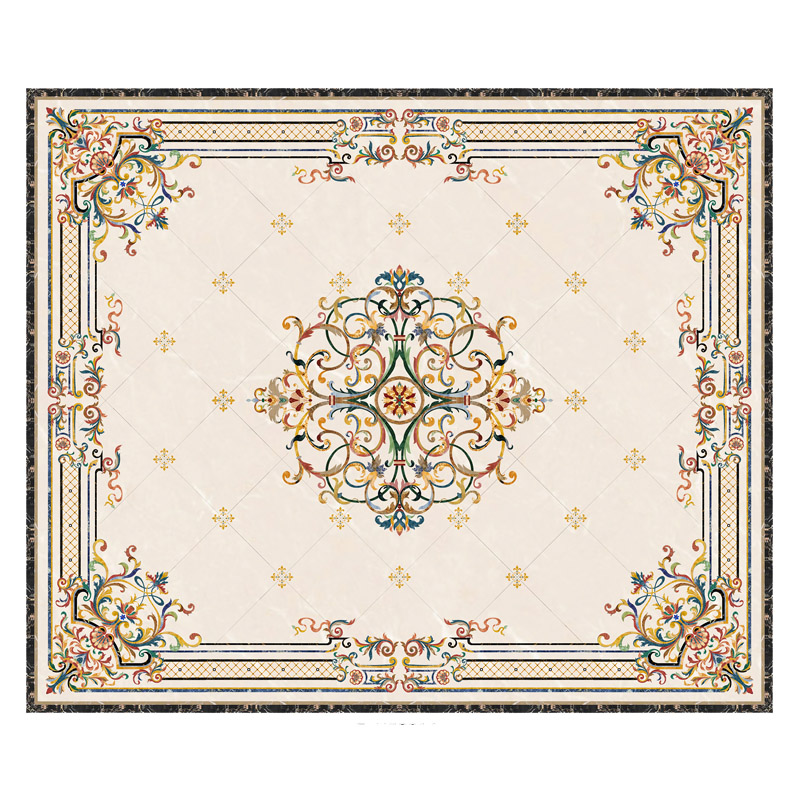
Why Marble Floor Borders Elevate Living Room Design
Marble floor borders transform living rooms into sophisticated spaces by creating distinct visual focal points and architectural definition. Unlike uniform flooring, a well-designed border frames the room—guiding the eye and establishing order, especially in open-concept layouts where functional zones can blur. This deliberate framing elevates the entire space, turning ordinary floors into intentional design statements. The natural veining and luminous luster of marble add organic texture and depth that synthetic materials cannot replicate, making borders both a luxury accent and a timeless investment.
Beyond aesthetics, marble borders enhance functionality: they protect high-traffic perimeter areas from wear and provide seamless transitions between flooring materials. For modern homes, a minimalist border in Carrara marble offers understated elegance, while bolder options like Emperador Dark deliver striking contrast. Crucially, borders harmonize with existing decor—tying together furniture, millwork, and architectural elements—to foster cohesion and ensure the border complements rather than competes with the room’s design narrative. Ultimately, marble borders merge artistry with practicality, proving that thoughtful details redefine a living room’s character.
Top Marble Border Design Styles for Modern Living Rooms
Minimalist Thin-Line Borders for Clean, Contemporary Spaces
For modern interiors seeking understated elegance, minimalist thin-line borders transform marble flooring into architectural art. Using narrow bands (1–3 inches) of contrasting marble—such as Nero Marquina against a light field—creates subtle definition without overwhelming the space. This approach enhances visual flow in open-concept layouts while preserving a clean, uncluttered aesthetic. It works especially well with large-format tiles, where a single continuous border frames the perimeter and draws attention outward to emphasize room dimensions.
Double-Row and Geometric Borders for Visual Structure and Sophistication
Double-row borders introduce rhythmic sophistication through parallel marble bands, often combining complementary stones like Carrara white and Calacatta gold for tonal harmony. Modern interpretations frequently incorporate geometric patterns—chevrons, Greek keys, or hexagonal inlays—that anchor furniture groupings or define transition zones. Strategic implementation follows proportional principles:
| Pattern Type | Optimal Application | Visual Impact |
|---|---|---|
| Dual Stripe | Perimeter framing | Elongates walls |
| Geometric Medallion | Central area | Creates focal anchor |
| Angular Motifs | Transition zones | Guides movement |
These designs add architectural weight to spacious living areas and support perceived value—research from the Real Estate Aesthetics Report 2024 indicates homes featuring structured borders achieve 23% higher perceived value. Their versatility allows coordination with existing furniture layouts while delivering timeless sophistication.
Choosing the Right Marble for Your Living Room Border
Carrara White: Light, Airy, and Timeless with Natural Veining
Carrara White remains a top choice for marble flooring borders due to its soft gray veining against a luminous white backdrop. Its light-reflective properties enhance brightness—making it ideal for north-facing rooms or spaces with limited natural light—while its subtle, organic patterning creates an illusion of expanded space. This makes it especially effective in smaller living rooms. Though moderately porous and requiring proper sealing, Carrara offers excellent durability for residential traffic and maintains timeless elegance across modern and traditional settings.
Emperador Dark & Arabescato: Bold Contrast and Architectural Drama
For impactful visual statements, Emperador Dark and Arabescato deliver bold contrast through deep chocolate-brown hues and dramatic white-on-black veining, respectively. These marbles create strong architectural focal points when used as borders—defining living room zones in open-concept layouts with clarity and presence. Emperador’s warm undertones pair naturally with wood furnishings, while Arabescato’s high-contrast patterning lends contemporary sophistication. Both varieties boast higher density than lighter marbles, offering superior resistance to heavy foot traffic. When proportioned correctly—typically occupying 6–10% of total floor area—they frame central flooring with authority, not dominance.
Key Design Principles for Proportional and Cohesive Marble Flooring Borders
Scaling Border Width and Pattern to Room Size and Layout
Scale your marble border design for optimal impact: In compact living rooms under 200 sq. ft., limit border widths to 4–6 inches to avoid visual overload; larger areas can accommodate 8–12 inches for grandeur. Align center borders precisely using diagonal laser-layout techniques—especially relative to key architectural features like fireplaces or doorways—to prevent fragmented tile rows along walls. For patterns, reserve thin linear mosaics for small-scale floor plans; geometric or double-row motifs suit expansive rooms, where repetitive angles reinforce rhythm without clutter.
Integrating the Border Seamlessly with Existing Marble Flooring and Decor
Achieve cohesion by matching vein direction, color saturation, and finish (honed vs. polished) between borders and primary flooring. For Carrara White fields, select borders with comparable gray veining density; for Emperador Dark borders, consider Arabescato fields with gradient transitions to bridge contrast. Pull inspiration from existing decor—echo fireplace stone textures in border inlays or mirror rug patterns through tessellated shapes. Consistent grout shade and surface finish across all marble elements unify the composition visually and reinforce intentional design.
FAQ
What are the benefits of using marble borders in a living room?
Marble borders provide visual focal points, define architectural spaces, protect high-traffic areas, and offer seamless transitions between materials. They also enhance the overall elegance and cohesion of a living room.
How do I select the right marble type for my living room borders?
Consider the existing decor and desired aesthetic. For subtle elegance, use Carrara White; for bold contrast, choose Emperador Dark or Arabescato. Ensure the marble’s veining and color complement your room's overall design.
What should I consider when designing marble borders?
Scale the border width to the room size and layout, integrate with existing decor, and match the finish with the primary flooring for cohesion. Ensure the design doesn’t overwhelm the room but instead adds to its sophistication.