
 EN
EN
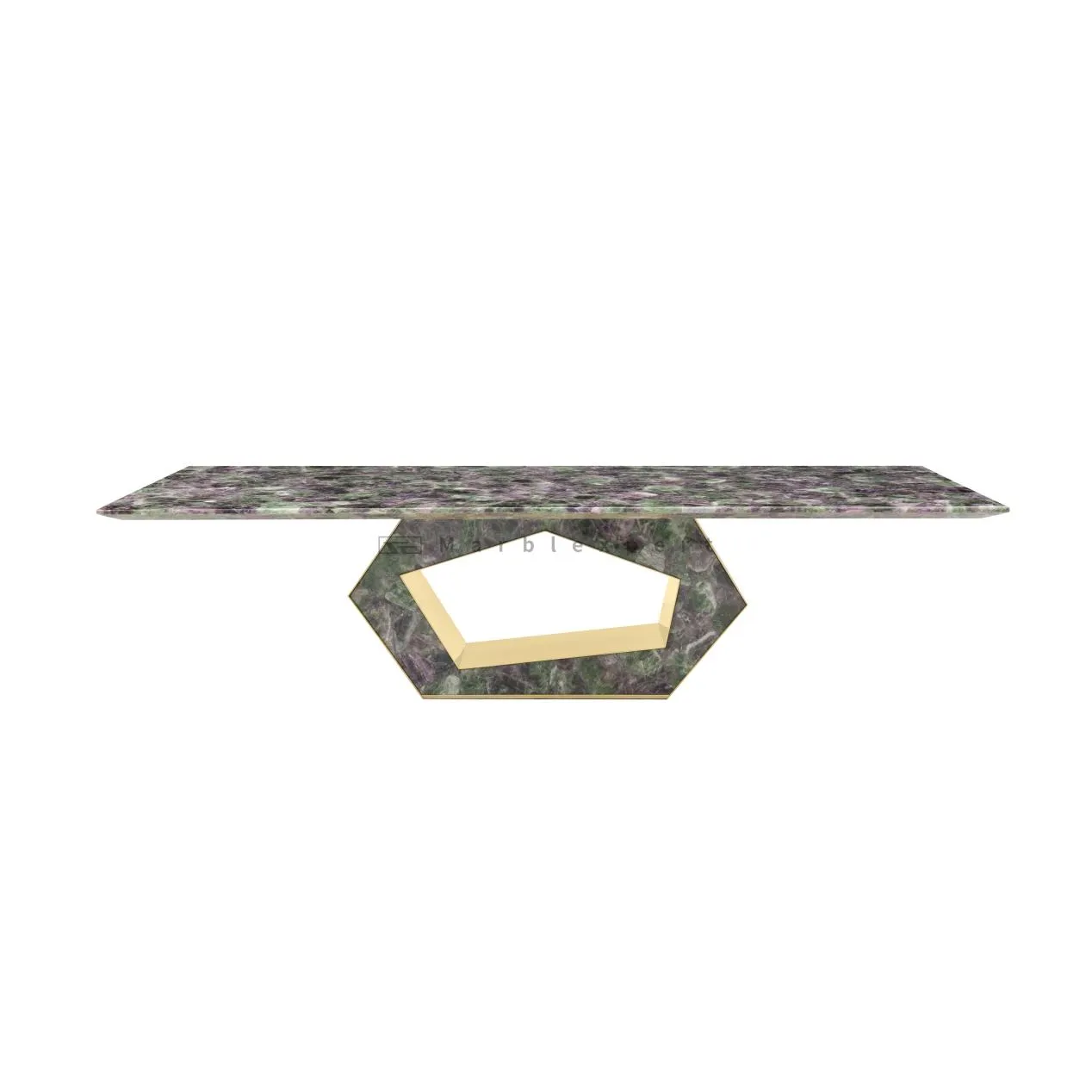
Choosing the Right Marble for Your Custom Dining Table
Carrara, Calacatta, Nero Marquina, and Verde Guatemala: Aesthetic Character and Practical Performance
When choosing marble, people need to weigh how it looks against how well it holds up over time. Carrara has that classic beauty with those soft gray lines running through white stone, great for homes with traditional vibes or ones trying to blend old and new styles. Calacatta really grabs eyes though, with those thick golden veins standing out against pure white backgrounds. It's quite striking as a centerpiece in any room, but since this type is pretty rare, expect to pay extra for it. If someone wants something with lots of contrast, Nero Marquina comes highly recommended. The black base with sharp white veins creates amazing depth. Then there's Verde Guatemala which brings nature indoors with its wild mix of greens and golds from minerals. All these marbles might look different, but they're not super tough stuff. They rate around 3 to 4 on the Mohs scale, so scratches happen easier compared to quartz or granite countertops. That's why professionals always recommend getting them sealed properly to protect against stains and chemical damage from things like lemon juice or wine spills.
How Porosity, Weight, Heat Resistance, and Veining Influence Durability and Design Flexibility
Beyond beauty, performance hinges on measurable physical properties:
| Trait | Impact on Use Case | Maintenance Consideration |
|---|---|---|
| Porosity | Higher absorption = greater stain risk | Seal every 6–12 months; Carrara requires extra diligence |
| Weight | Slabs weigh 160–190 lbs—limits base compatibility | Reinforced framing (metal or dense hardwood) is essential |
| Heat Resistance | Withstands hot dishes up to 480°F | Avoid thermal shock: never place boiling cookware directly on cold stone |
| Veining | Natural fissures can affect structural integrity along high-contrast lines | Reputable fabricators fill and reinforce these areas during fabrication |
The porosity does vary a bit between different marbles, with Verde Guatemala generally being just a tad denser than Carrara, but honestly this makes little difference in day to day use. What really matters for all natural marble is regular sealing, which protects against stains no matter what type we're talking about. When it comes to cleaning, stick strictly to pH neutral products because anything acidic or scratchy will slowly eat away at the surface. The weight of these stones definitely affects how we design bases for them, and they also react to temperature changes so we need to be careful around heat sources rather than completely avoiding them altogether.
Optimizing Dimensions and Shape for Space, Function, and Seating Capacity
A custom marble dining table needs to work well in both space and function. Leave around 36 inches from the table's edge to walls or other furniture so people can move around comfortably without bumping into things this is pretty much standard advice found in most home design manuals. For long rectangular spaces, go with a rectangular table since it fits better and seats about six to eight people when the length hits around 72 inches. Round or oval tables tend to encourage better conversation and look nicer in smaller or square shaped rooms where straight lines might feel cramped. When picking out a table, think about how it will actually be used day to day rather than just focusing on looks alone.
- Room proportions: Keep table footprint under 50% of floor area to avoid visual overcrowding
- Seating density: Allocate 24–30 inches per diner for functional elbow room
- Traffic flow: Maintain minimum 42-inch walkways around seated guests
- Shape psychology: Angular profiles suit formal or architectural settings; curved edges soften contemporary or family-oriented spaces
This intentional alignment ensures your marble table functions seamlessly—not just as furniture, but as an integrated part of your home's rhythm and scale.
Refining Surface and Edge Details for Style, Safety, and Longevity
Polished vs. Honed Finishes: Balancing Elegance, Etch Visibility, and Daily Usability
What kind of finish we pick really determines how our marble holds up day to day. Polished surfaces catch and reflect light beautifully, making them great for fancy dining areas but they show those pesky marks from wine spills, lemon juice, or vinegar almost instantly. Honed finishes have this nice soft sheen that hides minor scratches and general wear pretty well, although they do tend to absorb stains faster so getting the seal right becomes extra important. Marble naturally drinks in liquids at rates between 0.02% and 0.05% according to Natural Stone Institute data from last year, which means sealing isn't optional no matter what type of finish someone goes with. For special events and grand spaces, polished remains top choice. But if looking for something that works better in everyday living areas without losing style points, honed might be the smarter bet overall.
Edge Profiles—Beveled, Ogee, Waterfall—Enhancing Visual Weight and Thematic Cohesion
The way we handle edge details really connects the craft aspect with what designers actually intend for their pieces. Take beveled edges for instance they add some interesting geometric touches and make things safer too since those rounded corners just don't chip as easily as sharp ones do, even though they still look pretty modern. Then there's the ogee edge which gives off that classic vibe reminiscent of old fashioned woodworking techniques. These work especially well when paired with tables that have intricate wooden bases. Waterfall edges are another option where the countertop extends all the way down to meet the floor, making spaces feel more cohesive in those open layouts we see so much nowadays. But let's be honest, getting this right takes some serious engineering because the weight distribution has to be spot on otherwise it looks terrible after a few months. When choosing edges, proportions matter a lot. Make sure the size of the edge matches both the table dimensions and how the base is designed. If there are kids running around, go for rounded or eased edges absolutely no exceptions there. And remember to think about how different profiles interact with materials. Beveled edges tend to look great next to powder coated steel surfaces, whereas ogee profiles really shine when working with warmer toned hardwoods like walnut or mahogany.
Selecting and Integrating the Base Material for Structural Support and Design Harmony
Metal, Solid Wood, and Acrylic Bases: Matching Strength, Style, and Proportion to Your Marble Dining Table
Marble puts serious weight on the base it sits on around 18 pounds per square foot so whatever foundation we choose needs to handle that while still telling our design story. Powder coated steel gives us something really strong compared to how thick it actually is which means we can get those slim, artistic legs perfect for contemporary settings. Wood brings warmth and character but demands attention to detail when specifying materials. Legs need to be at least four inches across and connected using traditional mortise and tenon joints or reinforced with steel to stop them from bending or twisting over time. Acrylic bases look amazing because they appear so light but they absolutely need internal metal reinforcement to avoid cracking under pressure never go with plain acrylic for slabs wider than six feet. Getting the proportions right matters a lot too big bases fight against the fine veins in the stone while tiny ones just don't feel stable enough. To create harmony throughout the space, match the base finish with other elements like brushed metal fixtures or similar wood tones found in floors or cabinets. Alternatively, make the base blend into the background so the beauty of the marble takes center stage as intended.
Maintaining Your Custom Marble Dining Table for Lasting Beauty
Sealing Best Practices, pH-Neutral Cleaning, and Proven Strategies to Prevent Stains and Etching
How long marble lasts has less to do with how delicate it seems and everything to do with knowing how to take care of it properly. Get into the habit of sealing marble surfaces once a year with good quality penetrating sealant. This creates an invisible shield that gives those pesky liquids a few extra moments before they start working their way in. When it comes to everyday cleaning, stick strictly to pH neutral cleaners made specifically for stone surfaces. Stay away from household items like vinegar or lemon juice as well as regular all purpose sprays since these can permanently damage the marble by eating away at the calcium carbonate in the stone. Catch spills fast, ideally within about a minute, and blot them gently with a soft microfiber cloth. Don't ever go scrubbing or wiping hard. Here are some additional tips worth remembering:
- Use coasters under all beverages, especially wine and cocktails
- Place trivets under hot cookware (marble tolerates heat, but rapid temperature shifts above 120°F/49°C risk microfractures)
- Keep citrus, vinegar-based dressings, and cooking oils off the surface during prep
When applied consistently, this regimen reduces staining incidents by up to 80%, according to Stone Care International (2023). Thoughtful maintenance doesn’t preserve just appearance—it honors the material’s character and ensures your marble dining table remains a functional heirloom for decades.
FAQ
What are the best types of marble for custom dining tables?
Carrara, Calacatta, Nero Marquina, and Verde Guatemala are popular choices due to their aesthetic appeal and varying vein patterns.
What considerations are there for the base of the table?
The base must support the weight of the marble. Powder-coated steel, solid wood, and reinforced acrylic are all suitable choices.
How can I avoid stains and etching?
Use coasters under beverages and trivets under hot cookware. Catch spills quickly and clean with microfiber cloths.
Table of Contents
- Choosing the Right Marble for Your Custom Dining Table
- Optimizing Dimensions and Shape for Space, Function, and Seating Capacity
- Refining Surface and Edge Details for Style, Safety, and Longevity
- Selecting and Integrating the Base Material for Structural Support and Design Harmony
- Maintaining Your Custom Marble Dining Table for Lasting Beauty
- FAQ